
A Three-Piece Travel Tech Kit That Fits in a Side Pocket
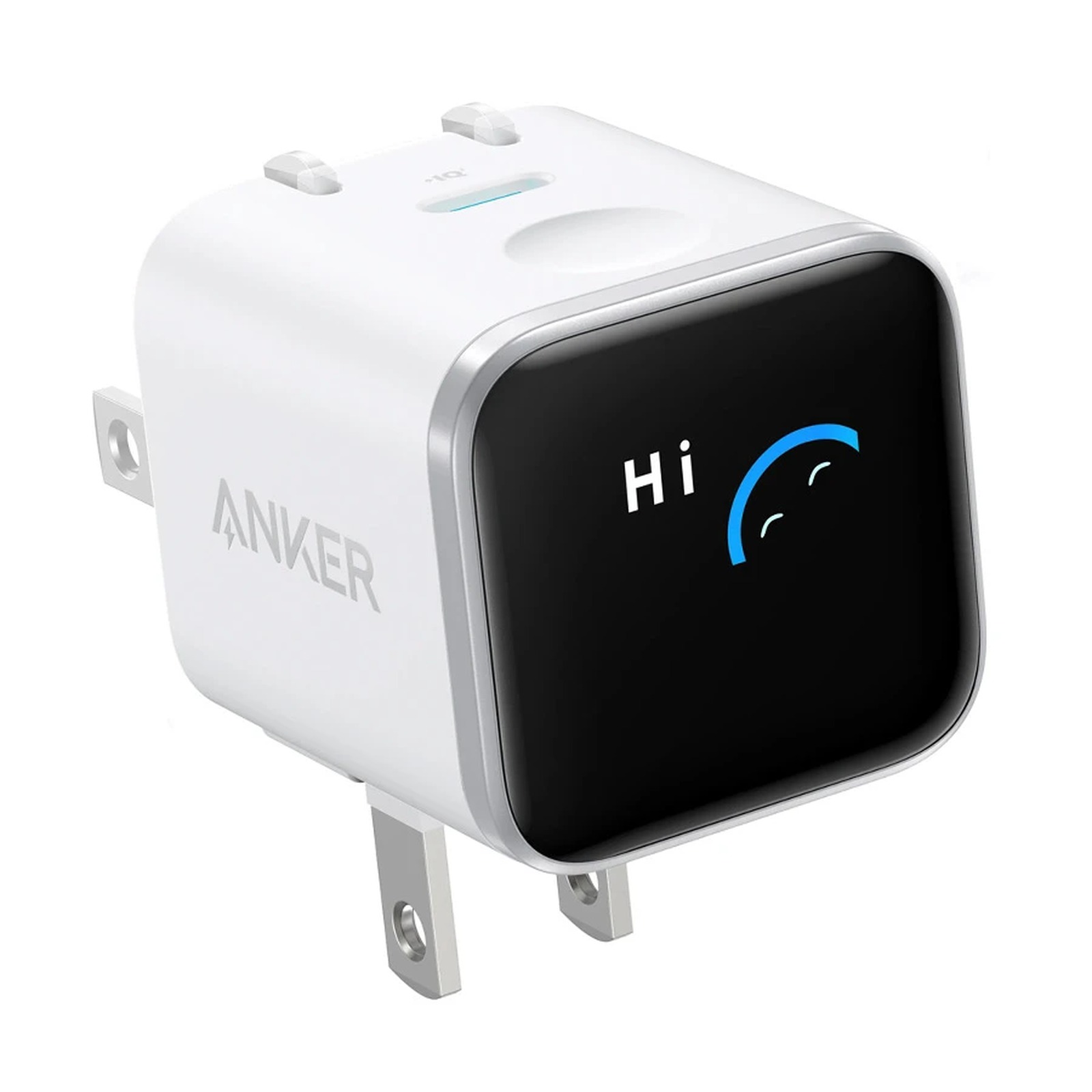
Travel tech fails in the same three places every trip: the wall, the bag you cannot see, and the cabin noise you pretend you can ignore. A kit that fits in a side pocket does not need twelve cables. It needs a charger that tells you what it is doing, a tag on the bag that matters, and earbuds that make the plane quieter without a second bag of accessories.
One brick, not a charging drawer
Start with power, because dead phones turn every other gadget into a paperweight. The Anker Nano 45W Smart Display USB-C Charger is a compact GaN wall brick with a tiny live wattage screen, 180-degree folding prongs, and a single USB-C port that can fast-charge a phone, tablet, or MacBook Air. On the site it is $25.99 against a $39.99 compare price, with a 4.5 rating.
The display is the feature you notice in a hotel room when you are not sure the outlet is doing anything. The folding prongs are why it survives a pouch without stabbing everything else. One USB-C port means you bring one cable you already trust, not a spider of adapters. Pack the brick in the same pocket every time so you are not unpacking the whole bag at security for a wall wart.
Put the tracker on the bag before you leave home
The Apple AirTag (2nd Generation) 1-Pack is the quieter half of the kit. Second-generation AirTag is louder than the first, with a longer Precision Finding range and a replaceable battery, so it clips onto a suitcase, backpack, or key ring before a trip. It is $24.00 against $29.00, also rated 4.5 on the site.
Do this at home, not at the curb. Slip it into a luggage tag sleeve, a small pocket you will not dig through daily, or onto keys if the bag already has a tracker habit. The point is not a scavenger hunt after the carousel. The point is that the bag you cannot see still has a signal you can follow with the phone you already charge on the Anker.
Cabin noise is a product problem, not a personality test
Apple AirPods Pro 3 are the current flagship in-ear buds with active noise cancellation, Adaptive Audio, and a USB-C charging case. The site price is $199.99 against a $249.00 list, with a 4.5 rating. That is real money, which is why they sit in this kit as the one premium piece instead of a pile of medium gadgets.
Charge the case from the same USB-C habit as the Anker. Keep the buds in a pocket you can reach without standing up mid-flight. Noise cancellation and Adaptive Audio are the features that matter in a cabin. Everything else is marketing you can ignore until you are actually on the plane.
How the three pieces share one pocket
Brick at the bottom. AirTag already attached to the bag or keys, not floating loose. AirPods case on top so you can grab it without fishing. That is the whole packing diagram. If the pocket only closes when you sit on it, you brought a fourth thing you do not need.
Use the Anker overnight in the room. Use the AirPods on the transit legs. Trust the AirTag when the bag is out of sight. Three jobs, three objects, no ceremony.
What this kit is not
It is not a full office in a backpack. The Anker has one USB-C port, so it will not charge three devices at once without a hub you did not pack. The AirTag will not find a bag that never entered the Find network ecosystem you already use. The AirPods will not fix a route that was poorly planned. This is a side-pocket kit for power, location, and quieter air, not a substitute for a packing list.
We are not publishing lab measurements, battery-hour charts, or cabin decibel scores. The product pages list the features above. Use them as shopping facts, then decide if those three jobs are the ones your next trip actually fails on.
A quick pre-trip check
Night before: confirm the Anker and a USB-C cable are in the pocket, the AirTag is on the bag you are taking, and the AirPods case has enough charge to matter. Morning of: do not add a second charger "just in case" unless you have a second pocket and a real reason. Just-in-case tech is how side pockets become checked bags.
Charge. Tag. Quiet. That is the kit.